A complete pickleball program, without the operational burden.
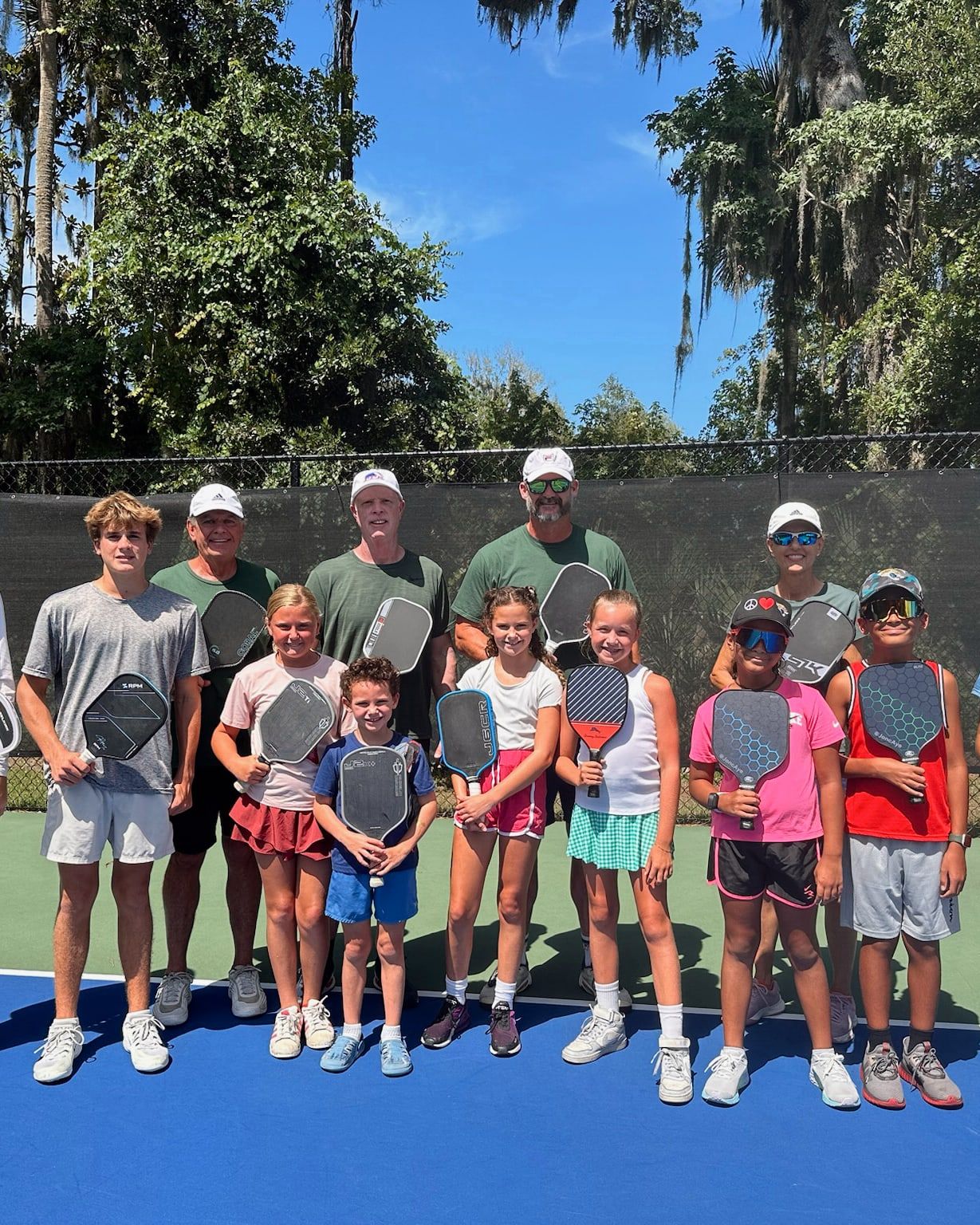
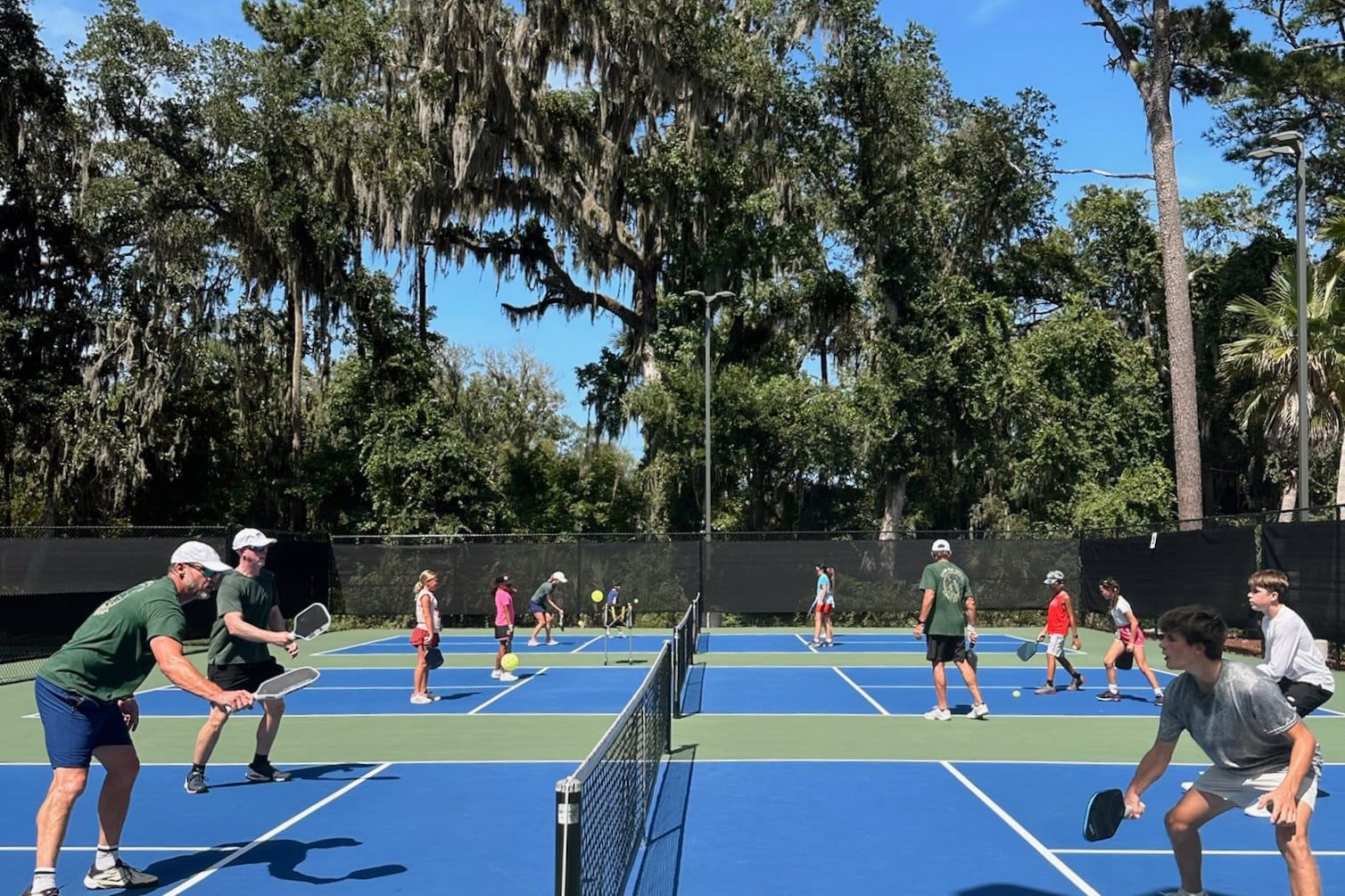
Victory Pickleball Academy is a ready-to-use, professionally structured youth program built to drop into your existing schedule. We bring the equipment, the experienced instructors, and the curriculum. You provide the space and the students. That’s it.
Three things come from us. One comes from you, and it is deliberately short.
We bring
Nets, paddles and balls, furnished and set up on-site for every session: 12 paddles, 24 balls, 2 portable nets, 12 cones and 12 floor spots.
We bring
Experienced instructors and high-level players — including PPR-certified coaches — background-checked before working with students.
We bring
A structured beginner-to-advanced curriculum for grades 1–12, plus setup, instruction, program oversight, and character development in every session.
You provide
Facility space — a gym, court, blacktop or multipurpose room — student access and scheduling windows, a point of contact, and water access for students.
No equipment investment.No new staff.No campus modifications.
What it takes on your end
The practical numbers, so you can check them against your building before we ever speak.
Class size
6–12
athletes per group, per session.
Coaching ratio
One coach
per group of 6–12.
Setup time
15–20 min
Coaches arrive early, set the court, and tear it down afterward.
Space
Any flat surface
A gym, a blacktop, or a multi-purpose room. You don’t need courts — we bring the
nets, paddles, balls and temporary lines,
and lay a full court over the surface you already have. Nothing is installed, nothing is
modified, and nothing stays behind.
Non-volley zoneService courtsNet · 20ft × 44ft
Formats that fit your schedule
Run a flexible 12–16 week semester, 1–3 sessions per week — or start with a short 6–8 week pilot to test fit. Scale from there based on demand.
01
After-school enrichment.
The model most schools start with. An activity block that needs no schedule surgery.
02
Inside the PE block.
A pickleball unit within physical education, mapped to movement competency and lifelong-fitness outcomes.
03
A standalone elective.
Run it on your existing schedule as its own course.
Safety & screening
Background checks
Every coach clears a background check before stepping on campus.
Training
Every coach completes youth-safety training (SafeSport-equivalent) before working with students.
Who coaches
Our coaching team includes PPR-certified instructors and high-level players, every one screened before working with students.
On court
Structured safety protocols: age-appropriate drills, controlled class sizes, supervised gameplay, and signed waivers.
Every one of those clears before a coach is on your campus. Not after.
Pickleball is also generally lower-impact than many traditional youth sports.
Funding & accessibility
A meaningful share of your families may already hold Florida scholarships, and
VPA is an approved Step Up For Students provider.
That can change what a program costs your school — or whether it costs your school anything at all.
PEP
Personalized Education Program — for homeschooling families directing their child’s education through an education savings account.
FES-EO
Educational Options — for families choosing a setting beyond their assigned public school, with ESA flexibility toward other approved uses.
FES-UA
Unique Abilities — for students with unique abilities, directed toward a broader range of approved services and supports.
Programs are priced per session and scoped to your school — grade bands, sessions per week,
and how it is funded. Tell us those and we’ll send a written proposal you can take to your board.
Eligible families can direct scholarship funds toward VPA through the Step Up marketplace.
Covers FES-UA, FTC, FES-EO and PEP. Confirm current eligibility and allowable expenses with
Step Up For Students.
Eligibility, awards and allowable expenses are defined by Step Up For Students and Florida law,
and they change. Verify current program rules directly with Step Up For Students.
Fit with PE & SEL goals
Adding an activity usually means justifying it against standards you already report on.
Here is what pickleball maps to, and what the program does to get there.
Physical Education
Movement competency, motor-skill development, and lifelong fitness.
The barrier to entry is low enough that students rally in the first session, so a block is
spent moving rather than queuing for a turn. What they build — grip, footwork, court
awareness, shot selection — transfers to any racket sport. And unlike most PE units, it
maps to a game they can keep playing on a public court at any age.
Social-Emotional Learning
Self-management, relationship skills, social awareness, and responsible decision-making.
Doubles is the mechanism. Every point needs a partner you have to talk to, and because the
sport rewards placement and patience over size and speed, mixed ages and abilities play in
the same group instead of being sorted by who is biggest. Coaches name focus, teamwork and
sportsmanship in every session, and a missed shot gets coached as information rather than
as failure.
How to start
1
Demo or consultation.
We meet your team, learn your space and schedule, and walk you through the program.
2
Choose your format.
A flexible 12–16 week semester, 1–3 sessions per week — or a short 6–8 week pilot to test fit first.
3
We support your review.
We supply a written proposal and documentation for board or administrator sign-off.
Administrator questions
When do sessions run? Our schedule is already full.
The program drops into time you already have: a unit inside your PE block, a standalone elective, an after-school enrichment block, or co-op days. Most programs run 1–3 sessions per week, and you can start with a short pilot in your existing schedule.
What space do we need? We have no dedicated courts.
You don’t need courts. Our portable nets and temporary lines set up in gyms, on blacktops, and in multipurpose rooms. If your students have a place to move, we can run the program there.
Will this create extra work for our staff?
Very little. VPA handles equipment, instruction, and program oversight. You provide the space, student access, and a point of contact for coordination.
Tell us about your school and what you’re looking for. We’ll send a written proposal — formats, scheduling, and pricing scoped to your program — that you can share with your team.